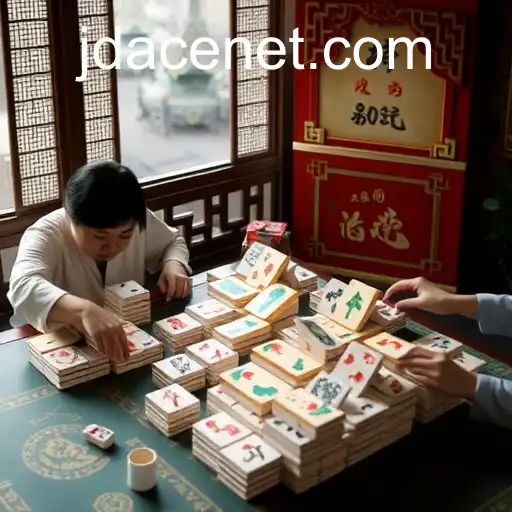
The Origins of Mahjong
Mahjong is an ancient game that finds its origins embedded deeply within the tapestry of Chinese culture. Historically, it is believed to have been developed during the Qing Dynasty (1644-1912), though some enthusiasts argue for a more ancient inception. Interestingly, Mahjong's etymology reflects its past, referencing an old Chinese term for sparrows, which can be seen as a nod to the poetic nature of its mysterious beginnings.
Evolution and Spread of Mahjong
Mahjong's journey from a pastime among the elite Chinese circles to its global recognition is fascinating. The game's rules and format underwent significant transformation when it was introduced to the Western world, particularly during the early 20th century. After being transported by Chinese immigrants, and later when it grasped the attention of American expatriates, Mahjong adapted various regional styles, thereby expanding its footprint.
With its growth, Mahjong saw a mix of changes that incorporated local traditions and preferences. From the traditional standardized ceremonial play that comes with four winds representing each player, to the more relaxed and diverse interpretations found across Western variants, the game has gone through a significant metamorphosis.
The Cultural Significance of Mahjong
More than just a game, Mahjong's cultural significance runs deep, providing insight into social practices, familial ties, and communal gatherings. Often, Mahjong can be heard on weekends echoing through homes, serving as a social glue that unites families and friends. Beyond leisure, many folklore and traditions became interwoven with Mahjong games, often used as a medium for nurturing relationships and gathering communities.
Additionally, Mahjong became an ambassador of soft diplomacy, contributing to the cultural exchange between East and West. It is recognized not only as a game but as an emblem of cultural heritage that continues to resonate across generations.
Understanding the Game Structure
The game of Mahjong is played with a set of 144 tiles based on Chinese characters and symbols, although some variations might include extra tiles. The standard structure revolves around four main suits, which are desired linear and specialized groupings. These consist of 'Bamboo','Characters','Dots', and also include honorary and bonus tiles—the Winds, the Dragons, the Flowers, and the Seasons.
Playing Mahjong requires strategic thinking, a keen eye, and the ability to detect subtle changes in opponents' strategies. A typical game is divided into four rounds (Wind rounds), each comprising typically four hands (or at least four walls). Winning in Mahjong involves making a legal hand, characterized by specific combinations of tiles, such as sets and pairs. The player must compile these within the frameworks of the drawn or discarded tiles, adding layers of complexity to the gameplay.
Rules and Gameplay
While each variant of Mahjong might have unique rules, the foundational principle remains grounded in completing sets and pairs. Players aim to complete a 'Mahjong hand' with 14 tiles, achieved via sequential or similar tile groupings. These include 'pungs' (three identical tiles), 'kongs' (four identical tiles), and 'chows' (three consecutive tiles of the same suit).
As players draw and discard tiles, they must balance offense and defense, often deducing others' intentions through their tactical moves. Embracing both competition and collaboration, savvy players must seize optimal chances to declare 'Mahjong,' all while being aware of opponents nearing their victory.
Modern Interpretations and the Digital Age
In today's tech-savvy era, Mahjong has seamlessly transitioned into the digital sphere, providing new life and accessibility to this timeless game. Online platforms and apps have broadened its appeal, catering to a younger generation who may experience the thrill of the game through a digital interface.
Beyond virtual adaptations, this versatility extends to the introduction of Mahjong into competitive sports like tournaments. Players from diverse backgrounds can engage, offering an international flavor to competitions centered around this storied game.
The Mahjong Experience
Whether played traditionally or through online portals, Mahjong's charm lies in its harmonious blend of strategy, art, and cultural nuances. As players engage tile by tile, they partake in a ceremony rich with historical resonance and social interaction, embodying both mental prowess and cultural understanding.
In essence, Mahjong continues to thrive as a symbol of cultural vitality—the preserved past meeting with present innovations. Its lessons, challenges, and enigma remain every bit as enthralling as when it was first conceived, ensuring its lasting place in the tapestry of global games.